The “S” in ESG in the manufacturing supply chain: the CFO, Tax & Legal perspective
The “S” in ESG within the manufacturing supply chain is not a “soft” topic. For CFO, Tax & Legal functions, it is a matter of measurable risk, because it concerns what happens to workers along the value chain—suppliers, sub-suppliers, contractors, and logistics providers. In manufacturing, when the social dimension is not properly managed, the consequences tend to become tangible: delays, production stoppages, contractual disputes, litigation, and extraordinary costs.
From reputational to operational: why the “S” impacts the business
Social risk in the supply chain is often viewed as reputational, but for many manufacturing companies it is primarily operational and financial. A serious incident or a “social” non-compliance at a critical supplier can lead to supply chain disruption, higher replacement costs, penalties, lost orders, and a deterioration in the risk perception held by banks and insurers. For a CFO, the key issue is predictability: knowing where the risks lie and being able to demonstrate how they are being managed.
The European framework: due diligence and disclosure raise the bar
The EU’s trajectory is pushing toward value-chain due diligence approaches—ongoing processes to identify, prevent, mitigate, and remediate adverse impacts on rights and working conditions. In parallel, European reporting standards include a specific focus on workers in the value chain (ESRS S2), with growing expectations around evidence and traceability. In addition, the topic is also linked to market access, through European measures aimed at countering products made with forced labour.
Where social risk arises in the manufacturing supply chain
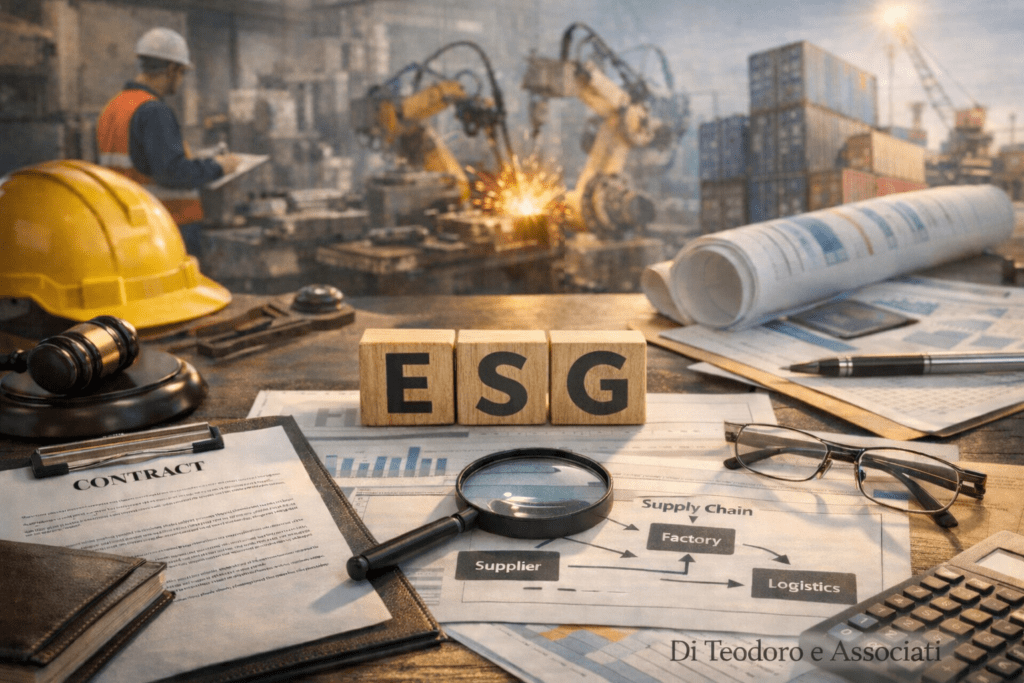
For CFO/Legal functions, the most relevant “S” risks are those that create contractual and evidentiary exposure. In manufacturing, three areas recur: working hours and actual pay (systematic overtime, inconsistent time records), health and safety (H&S) (incidents, maintenance, training), and contracting/subcontracting (opaque chains that reduce visibility and control). The longer the value chain becomes, the greater the distance between those who sell and those who do the work—and it is in that gap that opacity and vulnerabilities tend to grow.
Purchasing practices: when the buyer creates the risk
A point that is often overlooked is that the “S” in ESG across the supply chain also depends on how the buyer purchases. Unrealistic lead times, unstable forecasts, recurring rush orders, and price pressure can make it difficult to meet standards, pushing suppliers toward shortcuts on working hours or safety. From a CFO/Legal perspective, this means closing the “gap” between what is required contractually and what is incentivized economically.
Conclusion: the “S” as value-chain governance
Viewed through a CFO, Tax & Legal lens, the “S” in ESG within the manufacturing supply chain is primarily about governance: enforceable contracts, risk-proportionate controls, documented remediation, and reporting that is supportable with evidence. This is not rhetoric—it is a way to reduce surprises, stabilize the supply chain, and make the company’s position more defensible with customers, auditors, and lenders.
DTA